ArtFundMe / Editorial
How to Write an Artist Statement (for Grants and Open Calls)
A practical guide to writing a clear artist statement for grants and open calls — structure, length, what to cut, and how to sound like yourself.
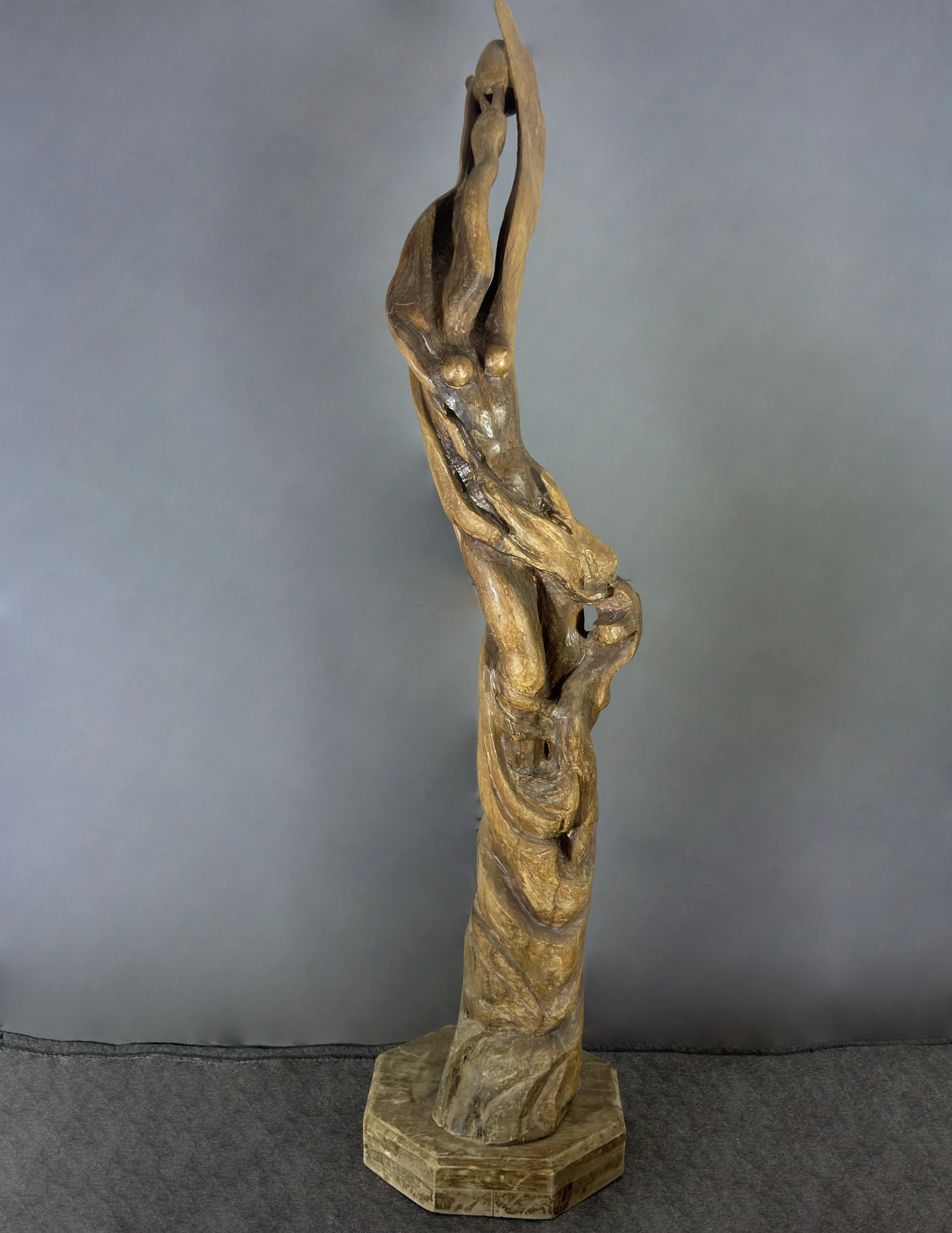
Image: The Female Is the Origin, carved olive-wood sculpture by Zohair Kherbik (artmajeur.com/zohair-kherbik). Artwork submitted to ArtFundMe; shown with credit to the artist.
An artist statement is not a confession, a CV in prose, or a press release. For grants and open calls it is a short piece of writing that helps a stranger understand what you make, how you make it, and why that matters enough to fund or select. Most panels read dozens of statements in a sitting. Clarity is a kindness.
This guide is written for working artists preparing applications. It focuses on statements used for funding and open calls rather than museum wall texts.
What an artist statement is for
A useful statement answers three questions quickly:
- What do you make (medium, form, scale)?
- How do you make it (process, materials, method)?
- Why does that approach matter in your practice (concerns, questions, stakes)?
Everything else — childhood origin myths, lists of every exhibition, quotations from theorists you have not fully digested — is optional and often harmful if it delays those three answers.
For ArtFundMe and similar open calls, the statement should also make it possible to imagine the work from a photograph and a few sentences. If a reader cannot picture anything after 150 words, rewrite.
Statement vs biography vs project proposal
Keep these separate:
- Artist statement: Explains the ongoing practice
- Biography: Facts: training, selected shows, location, roles
- Project proposal: What you will do with this specific grant or opportunity
Mixing them creates fog. A panel looking for practice development does not need your full CV inside the statement; a biography field exists for that. A project proposal should not restart the whole artist statement from scratch — it should point forward.
A practical structure (about 150–250 words)
Use this skeleton, then cut anything that does not earn its place:
- Opening sentence — practice in plain language. Medium + central concern.
Example shape: “I make [forms] that explore [concern] through [method].” - Process paragraph. Materials, techniques, research habits, studio constraints that shape the work.
- Stakes paragraph. What question are you returning to? What changes for a viewer?
- Optional bridge. One sentence on current direction — useful for development funds.
Avoid starting with “In today’s ever-changing art world.” Avoid claiming your work is unique, groundbreaking or universal. Specificity reads as confidence.
Length: match the form
- Open-call short fields (45–150 words): one tight paragraph or two. Lead with medium and method.
- Standard statement (150–300 words): the structure above.
- Long-form (500+ words): only when requested. Break with subheadings; do not dump biography.
If a form gives a hard word limit, treat it as a design constraint. Panels notice when writers ignore limits.
Language that helps (and language that fails)
Helpful:
- Concrete nouns: silicone, olive wood, hydrophone, mural, gouache on paper.
- Active verbs: carve, imprint, install, listen, cut, rebuild.
- Honest uncertainty: “I am testing…” is better than false mastery.
Unhelpful:
- Stacked adjectives (“vibrant, dynamic, thought-provoking”).
- Unexplained theory names used as perfume.
- Apologies (“I am only an emerging artist…”).
- Funding flattery (“your prestigious programme…”).
Read the statement aloud. If you would not say a sentence to another artist in the studio, cut it.
Working from images outward
A reliable method:
- Choose three recent works that represent the practice (not only the most flattering).
- For each, write two factual sentences: what it is; how it was made.
- Underline repeated words — those are your themes.
- Draft the statement from those repetitions, then remove the artwork-by-artwork list unless the form asks for it.
This keeps the writing attached to visible work rather than aspiration.
Common mistakes in grant statements
- Restarting your life story. Origin can matter; it rarely needs the first half of the page.
- Listing every opportunity. Put selection history in the biography or CV.
- Describing a project you wish you made. Stick to the practice you can evidence with images.
- Copy-pasting the same statement into every form. Adjust emphasis: a materials fund wants process; a community fund wants exchange; a research fund wants questions.
- Ignoring accessibility. Prefer short sentences. Explain acronyms once.
A short revision checklist
Before you submit:
- Could a non-specialist say what you make after one read?
- Is there at least one concrete material or method?
- Have you removed claims you cannot evidence?
- Does the tone match the images?
- Have you stayed inside the word count?
- Did someone else read it cold?
Example shape (illustrative, not a template to copy)
I build wearable and freestanding forms from silicone using prosthetic mould-making methods. By imprinting skin texture and assembling it into garments and bodies, I ask how recognition and empathy change when a body can be detached, repaired or worn by someone else. The studio work sits beside technical work in prosthetics, where the same materials serve film and museum contexts. I am currently extending this research into installation and performance.
That is enough for many short fields. Expand only with process detail the fund actually needs.
FAQ
How long should an artist statement be?
Unless a form says otherwise, aim for 150–250 words for a general practice statement. Short application fields may allow 45–150 words — write to the box.
Should I write in the first person?
Yes for most grant and open-call statements. Third person suits biographies and gallery press texts.
Do I need quotes from critics?
No. One precise sentence about the work beats a borrowed compliment.
How often should I update it?
Whenever the work shifts — new materials, a finished series, a change of question. Review before each major application cycle.
What if English is not my first language?
Clarity still wins. Use short sentences. Ask a trusted reader to check comprehension, not to make the writing “more artistic.”
Applying to ArtFundMe
If you are preparing materials for an open call, keep your statement, biography and images consistent. ArtFundMe’s cycle asks for a short practice text and an optional public excerpt — treat those as two lengths of the same honest account, not two different personas.
Apply to the current ArtFundMe cycle · See Honourable Mentions · Previous winners