ArtFundMe / Editorial
Zohair Kherbik — Summer 2026 Honourable Mention Interview
Syrian sculptor Zohair Kherbik, an ArtFundMe Summer 2026 Honourable Mention, on olive wood, Mediterranean myth, and two sculptures: The Descent of Astarte and The Female Is the Origin.
Zohair Kherbik is a Syrian sculptor and visual artist based in Jableh, Syria, with more than three decades of artistic practice. Working primarily with olive wood, he explores the relationship between memory, mythology and the human condition.
Drawing on the cultural heritage of the Eastern Mediterranean, particularly Phoenician and Syriac symbolism, his sculptures reinterpret ancient myths as contemporary reflections on identity, transformation, freedom and spiritual resilience. The human figure remains central to his work, serving as a meeting point between personal experience and collective memory.
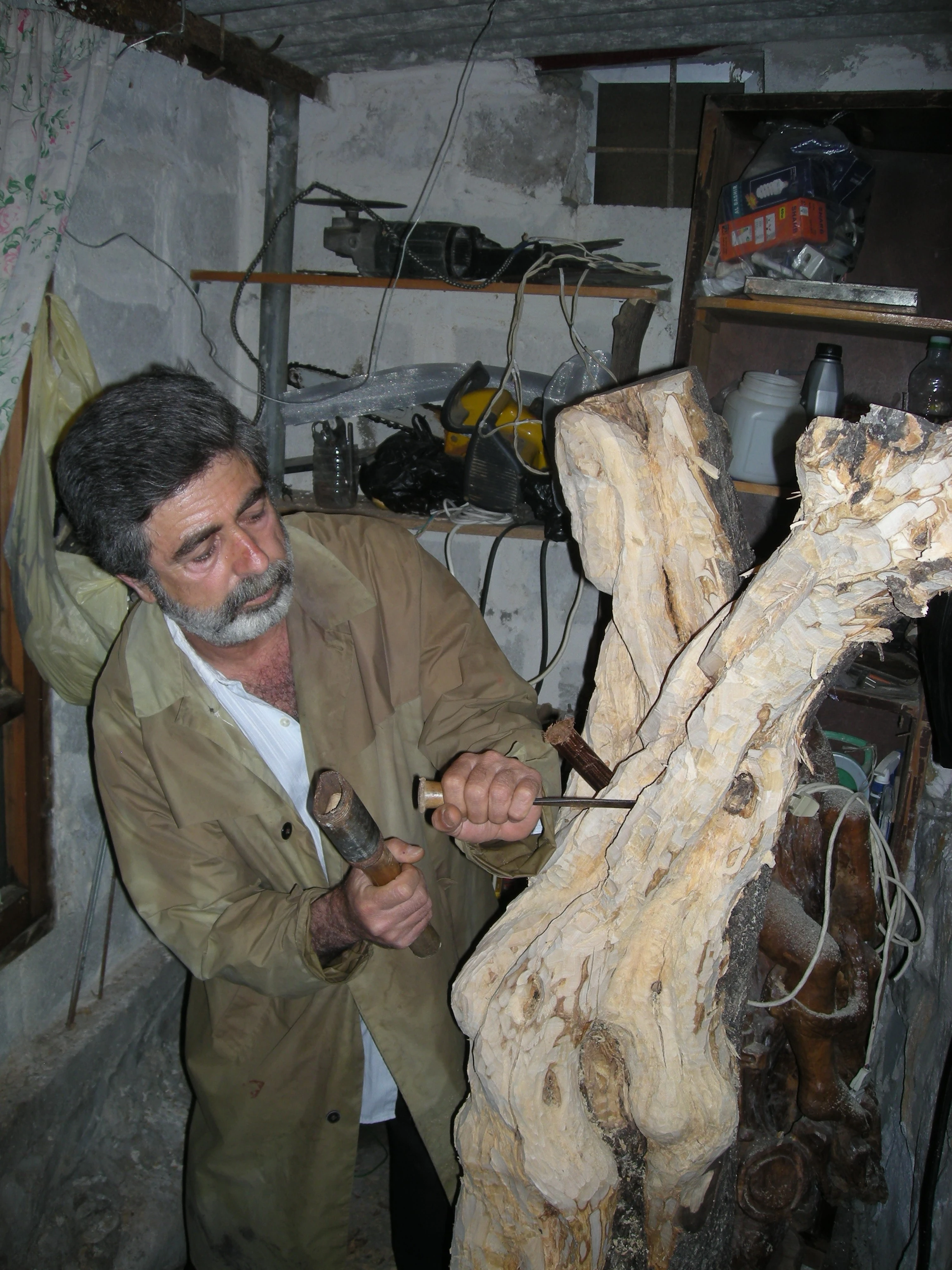
Through an independent, hands-on practice, Kherbik develops each sculpture in dialogue with the natural character and grain of the wood. He also develops his own sculptural techniques, making and adapting carving tools to meet the demands of his work. His expressive forms invite contemplation and remain open to interpretation.
Kherbik is an ArtFundMe Summer 2026 Honourable Mention. An Honourable Mention is editorial recognition only; it is not a funding award and is not connected to any funding decision.
In this interview he talks about why he works in olive wood, how Mesopotamian and Mediterranean feminine archetypes live inside contemporary carving, and two sculptures: The Descent of Astarte (2005) and The Female Is the Origin (2017).
“The viewer takes something from the work and adds something of their own to it.”
— Zohair Kherbik
Why olive wood? What does that material give a sculpture that other woods can't?
Olive wood is dense and hard, and it can be polished to a fine finish. Its grain also contains beautiful and distinctive curves, and it has a pleasant fragrance. Finally, it is readily available in my homeland.
How do you decide when to follow the grain and when to cut against your first idea?
The natural shape of an olive branch and the direction of its grain may suggest a particular path for a sculpture. However, if a new idea comes to me while I am working, olive wood adapts well to it, even when I work against the direction of the grain.
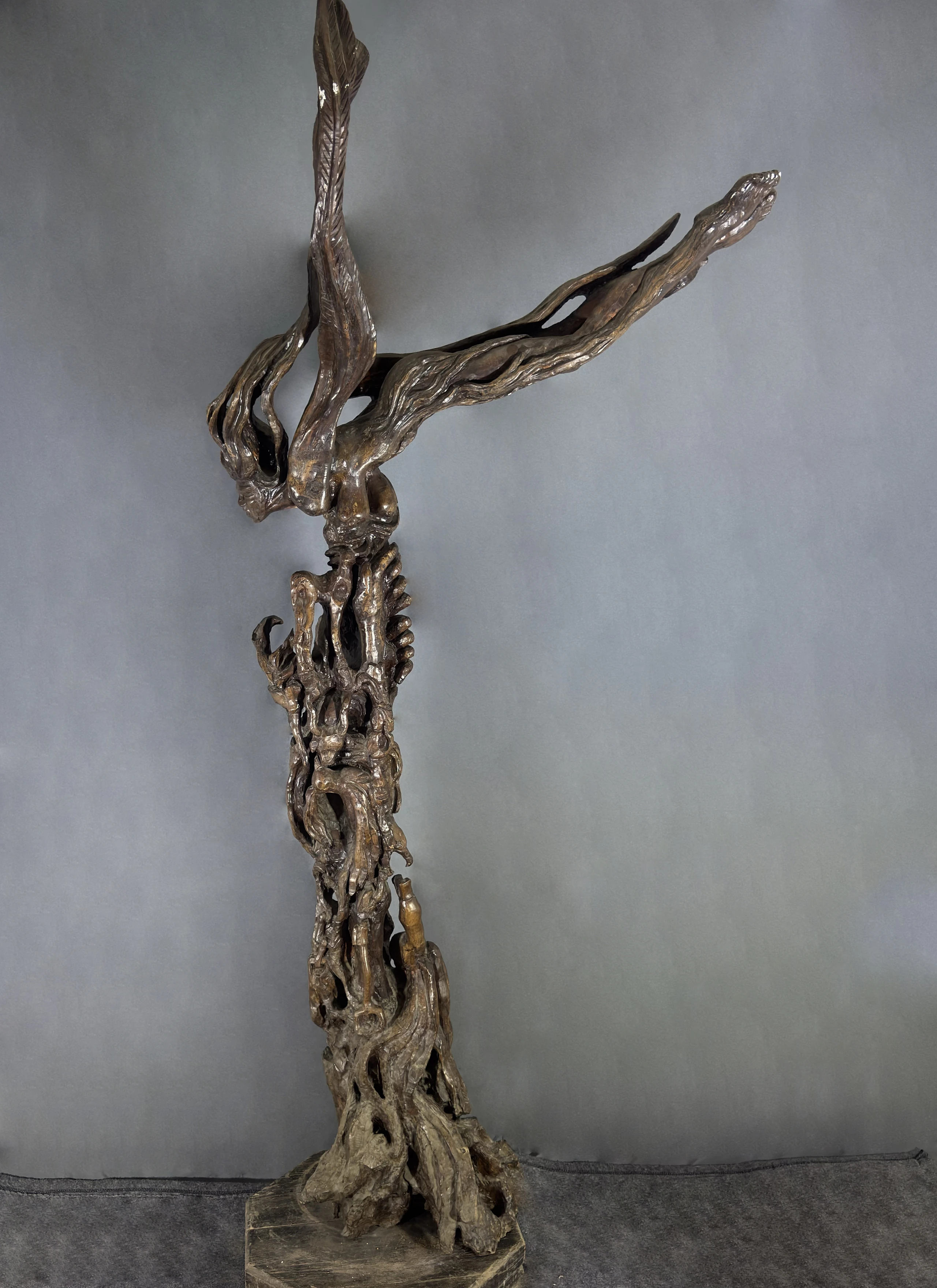
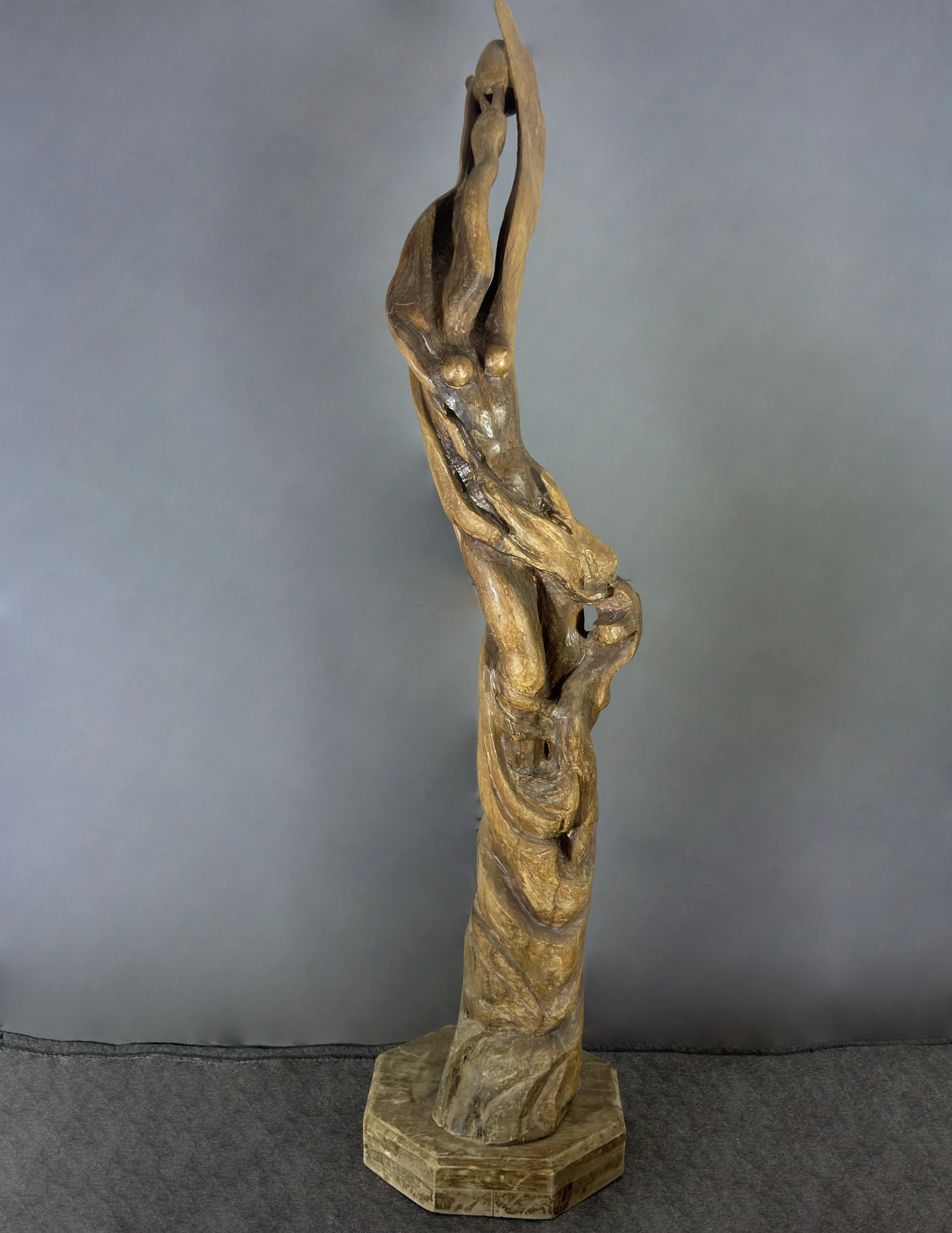
In The Female Is the Origin, how did the swan, the egg and the emerging figure come together as one structure?
The initial symbols of the sculpture are the body of a woman, crowned by the neck of a swan, with wings embracing an egg, which she also protects with her beak.
I sought to bring together feminine tenderness, longing, and determination in embracing and protecting the symbol of life's continuity, renewal, and offspring, represented by the egg.
How do Mesopotamian and Mediterranean feminine archetypes, such as Ishtar, Astarte, Aphrodite and Europa, live inside contemporary carving for you?
The civilizations of Mesopotamia and the Mediterranean, extending as far as its northern shores, are rich in myths born from the concepts, desires, and imaginings of the peoples of these regions, as well as from the answers they sought to the questions of their time and place.
These myths, and their interconnected historical relationships—from Ishtar and Astarte to Venus, Aphrodite, and others—offer insight into the interaction between civilizations and a sense of the beauty of those peoples' aspirations.
I try to inhabit the spirit of myth and reshape it according to what my imagination and my love for an artistic approach that may emerge spontaneously during the carving process suggest to me.
What does independent practice mean to you after more than three decades of making?
What makes me continue working, above all, is the freedom of independent artistic practice. Each work feels as though it belongs to a new school of its own, acquiring a distinct identity. I try to give it the spirit of what has been while drawing inspiration from what is yet to come, through subtle touches.
What do you hope viewers outside the Eastern Mediterranean understand when they meet these myths in wood?
A good artwork interacts with the viewer's sensibility according to the depth and breadth of their imagination and the nature of their cultural background. The viewer takes something from the work and adds something of their own to it.
Information about a sculpture, such as its title and general direction, is available to everyone. What matters most, however, is the space the work opens up for the viewer's imagination.
Which sculpture should someone new to your work look at first, and why?
I would recommend The Descent of Astarte, because it raises questions whose answers remain unfinished, while opening up a wide space for contemplating the renewal of life among peoples throughout history and into the present.
Selected sculptures
The Descent of Astarte
- Year: 2005
- Medium: Olive wood
- Dimensions: 205 × 100 × 30 cm
Inspired by the ancient Phoenician myth of Astarte and Adonis, this sculpture explores the enduring cycle of life, death, loss, and renewal. Rather than illustrating the myth literally, Zohair Kherbik transforms its figures and symbols — including Adonis, the wild boar, the key to the underworld, and the anemones emerging from his blood — into a visual reflection on memory, sacrifice, and rebirth. Through olive wood, a material deeply rooted in the land where these myths originated, the artist brings nature, history, and the human spirit together in a single sculptural form.
The Female Is the Origin
- Year: 2017
- Medium: Olive wood
- Dimensions: 200 × 35 × 27 cm
In this sculpture, Zohair Kherbik transforms the feminine figure into a universal symbol of creation, transformation, and continuity. The swan's head, the egg held between its wings, and the emerging female form evoke the mystery of creation, while the figure bearing the burning cross suggests the sacrifice and spiritual awakening that accompany every new beginning. Carved from a single piece of olive wood, the sculpture follows the natural movement of the grain, bringing its flowing forms and open spaces together in a continuous structure. Through this work, Kherbik reflects on the eternal source of life, where creation, memory, and spiritual transformation converge.
Gallery
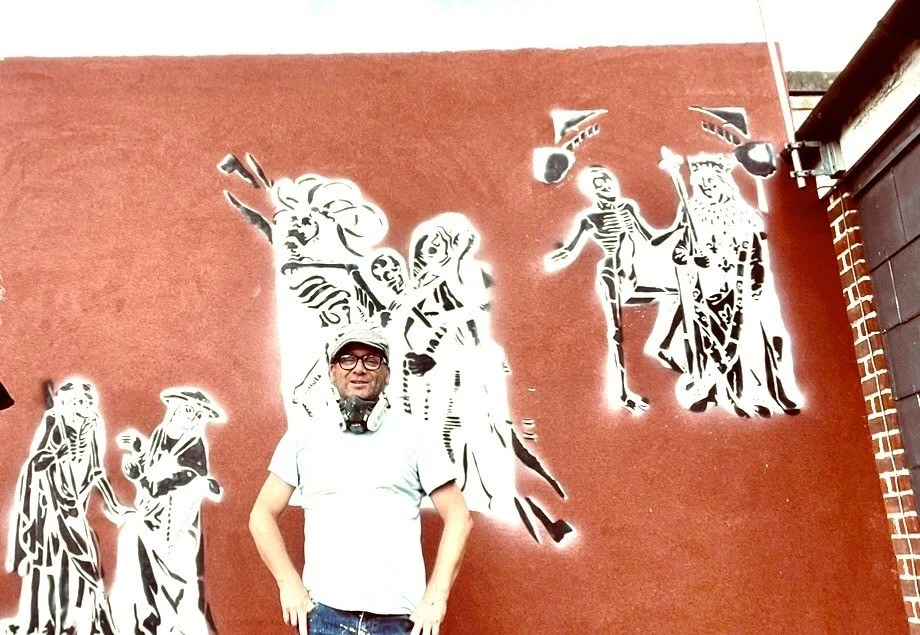
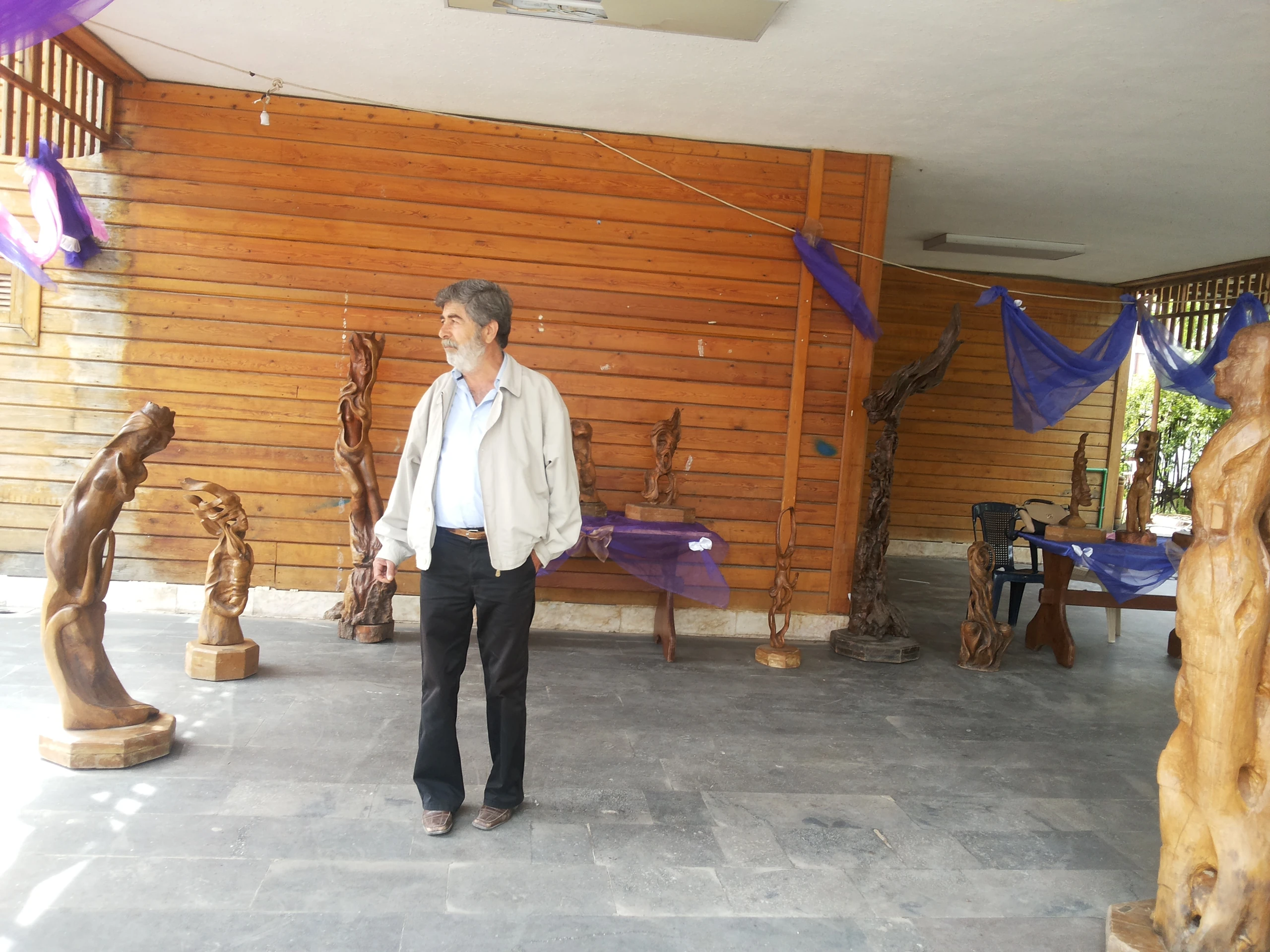
Portrait and selected works by Zohair Kherbik, shared for this interview.
Portfolio
Further examples of Kherbik's work can be viewed on his Saatchi Art profile.
His ArtFundMe Honourable Mention profile is at artfundme.com/honourable-mentions/zohair-kherbik.